


Remembrance Day: John Shiwak


Some war heroes are remembered for medals and famous acts of bravery. Others deserve to be remembered for the skills they brought to the battlefield and the sacrifices they made.
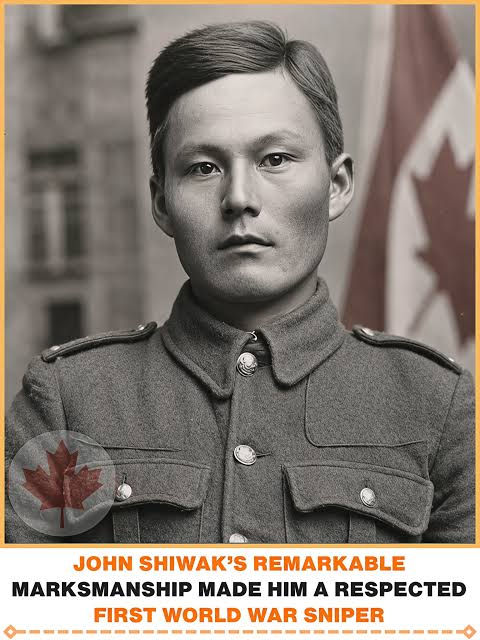
John Shiwak was an Inuk man born in 1889 in Cul-de-Sac, a tiny settlement near Rigolet, Labrador. Before the First World War, he lived as a trapper and hunter. Growing up in Labrador, where ammunition could be scarce, he learned patience, observation, and exceptional marksmanship. Those skills would eventually make him one of the most respected snipers in the Newfoundland Regiment.
Curious and adventurous, John wanted to explore the world, and the First World War provided him the opportunity to travel overseas.
In 1915, John travelled to St. John’s and enlisted. Military records show he was 26. He left the familiar landscape of Labrador and arrived in Devonport, England, on November 9th, 1915.
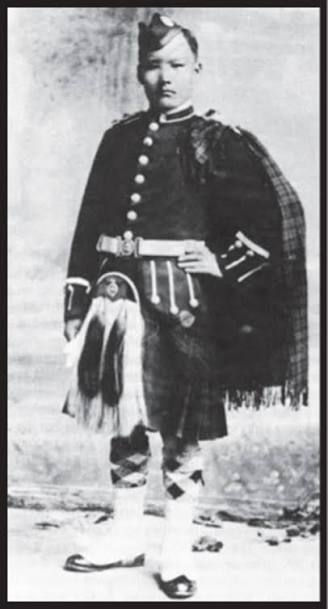
He joined the Newfoundland Regiment on the front lines in France on July 24th, 1916. John became known for his abilities as a sniper and scout. His work required concentration, courage, and the ability to observe enemy movements while putting himself in danger. His outdoor skills served him well.
He was the best sniper in his regiment and perhaps even in the whole British 29th Division. But the Western Front was a tough place to stay healthy. John required treatment for an infection in his head in early October 1916 and needed three weeks to recover. He was promoted to Lance Corporal in April 1917.
The Allies launched an offensive on the Western Front in the fall of 1917. They targeted Cambrai, France, which was a major German supply centre. The 29th British Division, including soldiers of the Newfoundland Regiment, were assigned to capture a part of the St. Quentin Canal.
Their advance started the morning of November 20th, 1917. The Newfoundlanders encountered some resistance but reached their first battlefield objective by 1:30 p.m. At dusk, the Newfoundlanders had made it to the outskirts of Masnières. The fighting to free the village continued through the night.
The next morning, John and fellow members of the Newfoundland Regiment were ordered to take up a position on the other side of Masnières. Their goal was to secure a sugar factory for use as a Battalion headquarters.
A German artillery shell hit the group of Newfoundlanders as they moved along the canal bank. Seven of them were killed by the explosion, including John Shiwak. His comrades quickly buried them in temporary graves, but ongoing artillery shelling erased all traces. Post-war military efforts to find it were unsuccessful.
Using archival research, modern historians located where John and the six other soldiers killed that day are buried. Their final resting place is likely beneath a present-day school. In 2023, the locals dedicated a plaque in John’s memory. To respect his culture, the text tells his story and honours his memory in English, Inuktitut and French.
This Remembrance Day, let us remember John Shiwak, not just as a skilled soldier, but as a son of Labrador who never returned home.
Lest we forget.


Comments