


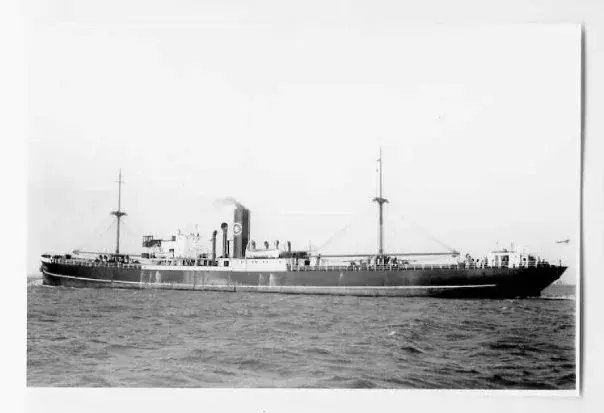
SS Langleecrag

On a cold, stormy morning in November 1947, forty-three men aboard a British cargo ship found themselves in a fight for survival off Newfoundland's Great Northern Peninsula.
I'm Helen Escott, crime historian.
The ship was the SS Langleecrag, sailing from Hull, England, to Quebec to load grain. As it approached the Strait of Belle Isle, dense fog reduced visibility to almost nothing.
Then, without warning...
The ship slammed into the jagged rocks of Great Sacred Island.
The impact was so violent that the vessel broke in two. Some of the crew thought they had struck an iceberg. Moments later, the boiler exploded.
At daylight, the crew attempted to reach shore. Two brave sailors tried to carry a lifeline to land, but the powerful surf swept them away. They drowned trying to save their shipmates.
The remaining forty-one men struggled ashore onto the barren island.
For five days they endured freezing rain, gale-force winds, and bitter cold. Their only shelter was a few tarpaulins weighed down with rocks, and they cooked what little food they had in a bucket while waiting for a rescue that might never come.

Even the first rescue attempt turned into another emergency. A lifeboat launched from the British aircraft carrier Empire MacCallum was driven ashore near Cape Onion, leaving fourteen rescuers stranded themselves.
Finally, when the weather eased, the Norwegian whaling ship Olaf Olsen reached Great Sacred Island. Using a harpoon line to secure a rope to shore, the crew spent twelve exhausting hours hauling the stranded sailors to safety, one by one.
Forty-one men survived.
Two never came home.
Today, the rusting remains of the SS Langleecrag can still be seen on Great Sacred Island—a haunting reminder that Newfoundland's rugged coastline has tested even the strongest ships and the bravest sailors.
Sometimes, the greatest stories of survival are written not on land... but on the sea.


Comments